October 25, 2026


The shoebox works fine until it doesn't. For a year or two, a couple of watches can live in a drawer wrapped in a soft cloth and nothing bad happens. Then a third arrives, then a fourth, and suddenly you are tipping them all out onto the bed to find the one you want, listening for the small clink that means a crystal has met a crown. That is the moment storage stops being an afterthought and becomes part of how you live with your watches. Two accessories come up again and again: the watch box and the travel case. They are not rivals. They solve different problems, and most collections eventually want a bit of both.
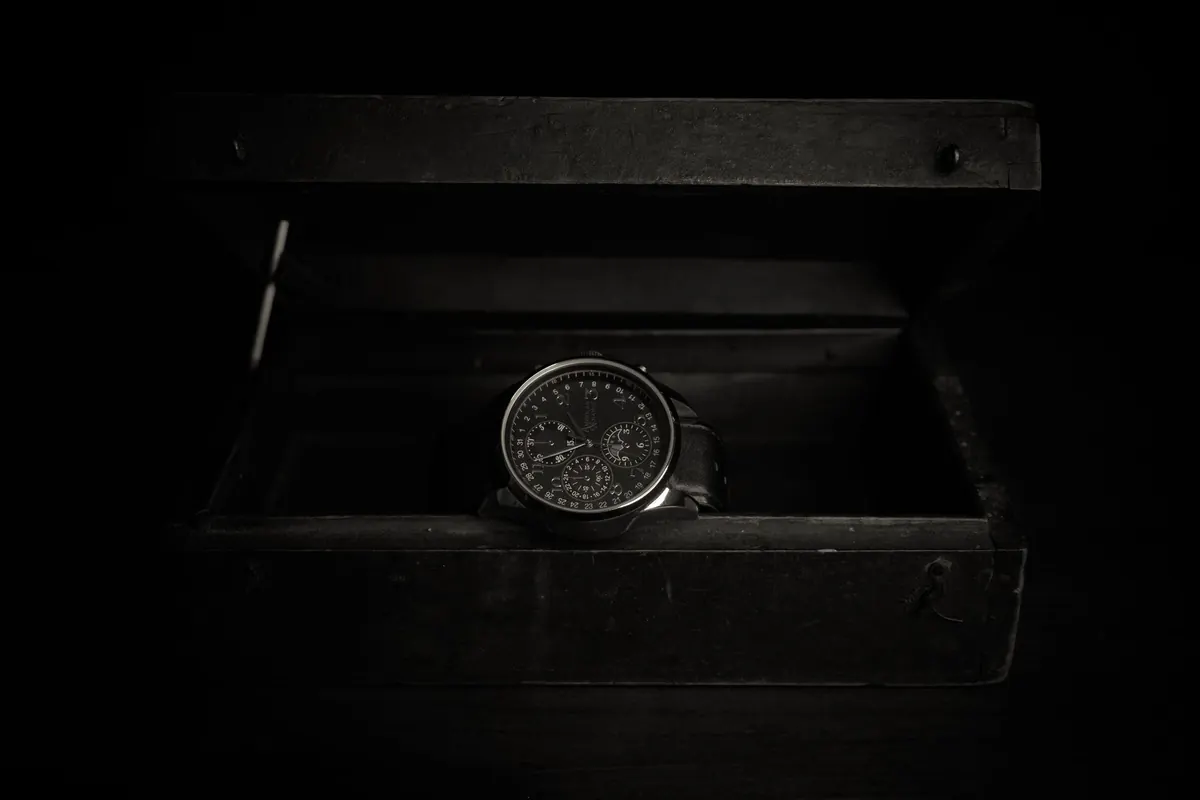
A watch box is furniture. It sits on a dresser, on a shelf, or inside a drawer, holds anywhere from four to a dozen watches on individual cushions, and closes to keep dust off. Its work happens in one place: separating watches so they don't scratch each other, keeping straps out of direct light, and — if it has a glass lid — letting you see the collection at a glance so you actually wear it.
A travel case is luggage. It is padded, zipped or snapped shut, and sized to disappear into a backpack or a carry-on. Its job is to survive being moved: wedged between a laptop and a pair of shoes, lifted out onto a hotel bathroom shelf, dropped into a security tray.
The overlap between the two is smaller than product photography suggests. A beautiful box does nothing for a weekend in Lisbon, and a two-slot travel case will not organise ten watches at home.
Most boxes fall into two camps. The display type has a glass or acrylic lid and sits out in the room; the drawer type slides into a wardrobe and keeps everything out of sight. Choose according to your household rather than your taste in furniture — a glass lid is lovely until you have small children or a cat with ambitions.
Cushion size and shape come first. A cushion that is too fat forces a bracelet closed and, over months, stretches it; one that is too thin leaves the watch flopping around. Look for removable or lightly compressible cushions and check that your smallest and largest watches both sit properly.
Next, clearance. Measure your tallest piece — a dive watch on a bracelet with a domed crystal is usually the culprit — and make sure the lid closes without pressing on the glass or the crown. Then check the lining: microfibre, suede or soft felt that will not shed fibres onto dials. Cheap raw foam looks fine for two years and then starts crumbling into orange dust.
Keep the box out of direct sunlight. UV fades leather and rubber straps and does nothing good for dials, and the heat that builds up behind glass is unkind to gaskets and lubricants over time. A bedroom drawer or a shaded shelf is ideal. Bathrooms are the worst room in the house for it, for reasons of humidity you probably already suspect.
One buying note: choose a box with one or two spare slots, not six. Spare slots are genuinely useful for a watch coming back from service or a strap change in progress. A box that is half empty stops being storage and becomes a to-do list.
Travel cases come in three broad shapes. Single-watch pods are rigid clamshells, sometimes with a raised crown guard, and slip into a jacket pocket. Multi-watch zip cases hold two to four watches on cushions and open flat like a book. Watch rolls are the soft, lightweight option — pleasant for a cabin bag, but they offer the least structure.
For most people, a two-slot case is the sweet spot: one watch on the wrist, one in the case. It is small enough to live permanently in a carry-on, which means you never have to think about packing it.
Pay attention to how a case opens. One that folds out flat is far easier to use on a cramped hotel nightstand than one where the lid flops backward and takes the whole thing with it. Check the zip, if there is one: a stiff pull tab can scratch a caseback when you are in a hurry at security. And if a case is going into checked luggage — better that it doesn't — only a hard shell makes any sense at all.
One habit worth adopting: never let a bracelet watch sit loose against a polished case in the same compartment. Metal on metal in a soft pouch is how small scratches appear out of nowhere. Individual pouches inside a roll solve it.
Whether you are buying a box that lives on a shelf or a case that lives in a bag, the questions are similar.
A six-slot box covers it comfortably. No winder needed unless you specifically enjoy one; a morning wind and a quick time set takes less effort than most people expect.
Start with a single travel pod. A box can wait until the collection grows, and buying one early just means storing empty cushions.
A two- or three-slot zip case plus a modest box at home. This is the most common setup among people who fly regularly, and the easiest to live with.
Favour a box with individual compartments and no stacking of any kind, and pick a travel case with a firm shell rather than a roll. Older crystals and plated cases do not forgive pressure.
Quartz watches: pull the crown out to the setting position when a piece is going into storage for months. It stops the movement and saves the battery, and it is easy to reverse.
Mechanical watches: there is no harm in letting them rest. If one has not run in a while, wind it gently, set the time, and wear it — no drama required. Keep leather straps in a room with normal air rather than a sealed box in a humid climate, and store spare straps flat or loosely rolled instead of folded at a sharp angle.
Count the watches you own and the trips you take in a year. If the number of watches is above three and most of them stay home, buy the box first — it will change your daily routine more than any case will. If you travel monthly with one or two pieces, buy the case first and use a drawer divider at home in the meantime.
Then do one small thing: take the watches out of the shoebox, check each one for scratches and strap wear, and give them a proper place. A collection that is easy to see is a collection that gets worn, and that is the only storage argument that really counts.
Photo: PonerMas s / Pexels
Always time for timeless watches and clocks..
Copyright © 2026 Ore Sempre. All rights reserved. Ore Sempre.